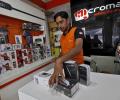
At least two of them - Lava and Micromax - are arming themselves against the Chinese rivals which made them insignificant in the local market over the past few years.

The new mantra was to align Apple's ambition with the government's, focusing on Modi's favourite themes of Make in India, employment generation and India as a high-tech export hub.


With slower than expected growth in smartphone penetration, operators and OEMs are joining hands to provide affordable mobile devices with attractive offers.

The device will be available from April 23 for Rs 22,000, said a company statement.

Chinese smartphone company Xiaomi led the Indian smartphone market during the April-June 2022 period despite a 22 per cent decline in its sales volume, a Cyber Media Research (CMR) report said on Thursday. Xiaomi stayed on top position with 20 per cent market share, followed by Samsung with 18 per cent share. The Korean phone maker, however, led the growth in 5G phone category with 28 per cent market share in that segment, according to the report.

Components manufactured in India are low-value products like casing and box packaging that constitute 5% of the bill for materials required in phone manufacturing.

The company will launch Google Android One phones priced at Rs 6,000-7,000 by September-end.

Samsung makes the largest number of non-4G feature phones in India

LCD displays could be produced in India in the near future.
The Intel Inside logo, which consumers have always seen on laptops and PCs, will now be seen on smartphones, too. In April, mobile vendor Lava International will launch its first smartphone in India based on the Intel processors, expected to be priced around Rs 25,000.

Don't view the mobile phone or tablet as a shut-up toy while a parent is busy, highlights Dr Aarti Bakshi.

Prime Minister Narendra Modi's call to make this decade a "techade" for India and the push for 5G, semiconductors and transformation through digital services is going to boost the technology sector in the country, industry players said on Monday. Modi, in his speech on the 76th Independence Day, touched upon all-round development of technology in the country, from 5G to push for electronic chips, laying of optical fibre cable (OFC) network across villages and enablement of digital entrepreneurship in villages through Common Services Centres, making the present decade as "techade" for India. Homegrown mobile devices maker Lava International's Chairman and Managing Director Hari Om Rai said electronics and technology sectors create about $4 trillion of revenue.
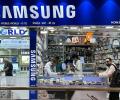
As many as 37 per cent of smartphones sold in India in 2022 cost Rs 15,000 or more.
Karbonn Mobiles, Intex, Lava, Micromax and Maxx Mobile are among the brands that have entered markets in Bangladesh, Nepal, Sri Lanka, West Asia and Africa.

Apple Inc's leading contract manufacturer, Taiwanese giant Wistron, has exceeded its investment obligation in India in just eight months, although the government's production-linked investment (PLI) scheme allowed it to complete the investment in four years. Between August 2020 and end March 2021, Wistron made an investment of Rs 1255 crore - 25 per cent more than the total investment it had committed to the government. Under the PLI scheme for mobile devices, the government had stipulated that each of the five participating global companies needed to invest Rs 250 crore every year for the first four years, totalling Rs 1,000 crore.

Mind blowing winning snaps from the annual iPhone Photo Awards have been revealed -- and it's hard to believe they were taken on a mobile. The competition only allows photos taken with an iPhone or iPad. This year's Grand Prize Winner and Photographer of the Year Award went to Dimpy Bhalotia, a street photographer from the United Kingdom, who used an iPhone X to capture her image, "Flying Boys," taken in Banaras, India. In a press release, the photo is described as follows: "Three boys take flight from a wall into the Ganges River, their expressive limbs filling the sky with both tension and exuberance." Check out the winners below.

The firefighter made an error of judgement and did not know whom the mobile phones belonged to.

To cash in on the festive season, mobile handset makers like Apple, HTC, Karbonn and Lava have launched a series of smartphones in the price range starting from Rs 5,000 to Rs 59,500 for Indian consumers.

The Xolo Black from Lava is indeed a well rounded mobile phone. However, the recent price cuts offered by Lenovo for Moto E and Moto G (second generation), Xolo Black can only find a firm footing if it came with some swift price cuts.

The US tech major is planning to begin local production of its upcoming iPhone 12 by next April - within six months of its launch.

While the 'Made in China' tag continues to be dominant as far as handsets in India go, things are beginning to change.
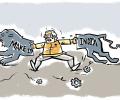
Work is underway in identifying global companies in sectors ranging from electronics, auto components and medical equipment to shift part of their existing or incremental manufacturing to India.

India is the world's third largest smartphone market.

The revival of feature phones in India is driven by low-cost access to the internet, but the 'dumb phones' are learning to get smart and create a niche, says Veer Arjun Singh.

The device, Win 400, is available at Rs 4,979.

Are they worth Rs 8,499? Ashish Narsale/Rediff.com finds out.

In 2015, as many as 15 major Chinese smartphone brands stepped into India.

Companies are playing the price game to woo customers.

In a first, the India's smartphone market fell by 4%.

Overall mobile phone production was about 68 million in 2014, increased to 100 million in 2015 and 350-400 million in July 2016.

Chinese mobile brands are deeply entrenched in the Indian market. A move to bar them may send a bold diplomatic message. But its cost for the local industry is anybody's guess. In the event that Chinese brands face curbs, two handset makers - Samsung and Apple - squarely stand to gain.

Experts say while the increasing demand for a ban on Chinese goods might make for good optics, the reality is that India is still heavily dependent on that country in a wide range of industries like electronics, mobile devices, auto, pharma, telecom equipment, and fertilisers.
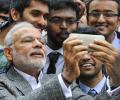
India has been able to attract 40 global smartphone makers to the country -- creating at least 50,000 jobs. But GST could hurt that, discovers Ayan Pramanik.

Mozilla showcased a smartphone prototype costing as little as $25 at the Mobile World Congress in Barcelona in February, targeting developing countries including India and China.

From the ruins of a Syrian city to shamans, these are just some of the 60 breathtaking images selected as finalists in Smithsonian Magazine's 16th Annual Photo Contest. The magazine received a whopping 48,000 submissions from photographers in 155 countries between March 27 to November 30 2018. The annual contest has gifted us breathtaking pictures from six different categories: Travel, Altered Images, Mobile, Natural World, People, and The American Experience. March 27 is the day when Smithsonian will announce the winner of the Grand Prize. Till then, enjoy some of the amazing work done by the photographers.

Fair trade watchdog CCI has approved Microsoft's proposed $7.2 billion acquisition of Nokia's mobile devices business, citing that the deal would not have adverse impact on competition in the Indian market.

'Indian entrepreneurs became traders for Chinese goods rather than producers of goods.'

Foxconn is yet to submit its land requirements to the Maharashtra government to set up its factories.
 © 2026 Rediff.com - Advertise with us - Disclaimer - Privacy Policy - Sitemap - Feedback - About us - Terms of use - Grievances